Transmission belts consists of classic V, poly V and timing belt. They are designed to transfer motion and power between pullies. Common applications are automotive industry, agricultural equipment, air compressors, pumps, home appliances. Each type serves different purposes based on their design and the type of power transmission they require. Here’s a brief comparison among the three types.
Belt Comparison
| Feature | V-Belt (Classic) | Poly V-Belt (Ribbed Belt) | Timing Belt (Synchronous Belt) |
|---|---|---|---|
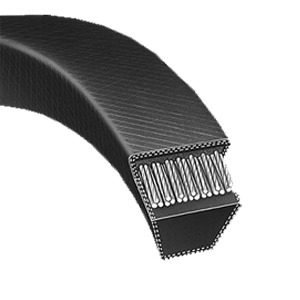 | 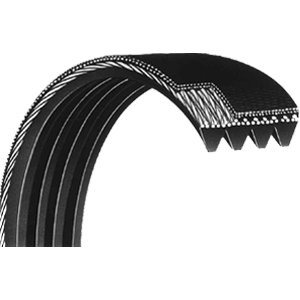 | 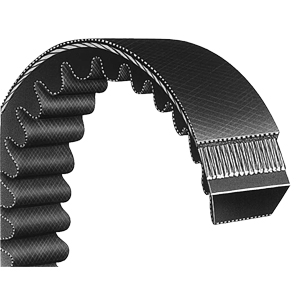 |
|
| Design | Trapezoidal cross-section | Flat belt with multiple ribs | Toothed belt with precise engagement with pulley grooves |
| Working Principle | Friction-based power transmission | Friction-based with multiple contact points | Precise engagement with pulley teeth |
| Power Transmission | Medium speed High torque | High speed Moderate torque | Medium speed Precision motion control |
| Common Applications | Medium to heavy-duty machinery, agriculture, mining, industrial equipment | Automotive (modern vehicles), household appliances, HVAC, office machines | Automotive timing systems, CNC machines, robotics, medical equipment |
| Best for | High torque, heavy loads | High-speed, smooth-running applications | Precision applications need exact timing |
| Flexibility | Low (larger pulleys) | High (small pulleys) | Moderate |
| Speed | Moderate | High-speed | Controlled speed with precision |
| Cost | ★★★ | ★★★★ | ★★★★★ |
| Life Span | ★★★ | ★★★★ | ★★★★★ |
| Anti-Slip | ★★★ | ★★★★ | ★★★★★ |
| Efficiency | ★★★ | ★★★★ | ★★★★★ |
| Low Noise & Vibration | ★★★ | ★★★★ | ★★★★★ |
| Low Maintenance | ★★★ | ★★★★ | ★★★★★ |
| Advantages | Simple, cost-effective, good for medium-duty applications. | Compact, efficient, quieter, and capable of transmitting more power in smaller spaces. | Ensures precise, synchronized motion; no slippage. Ideal for critical timing applications. |
| Disadvantages | Can slip under heavy load, requires more space, less efficient at higher speeds. | May wear out faster than V-belts under extreme conditions; more expensive. | More expensive; requires precise alignment and may not be suitable for high-power applications. |